The Hidden Links Between Wheel Section Probabilities and Tiered Loyalty Reward Structures in Licensed Digital Platforms
Written by Mara Wagner · Aug 29, 2026
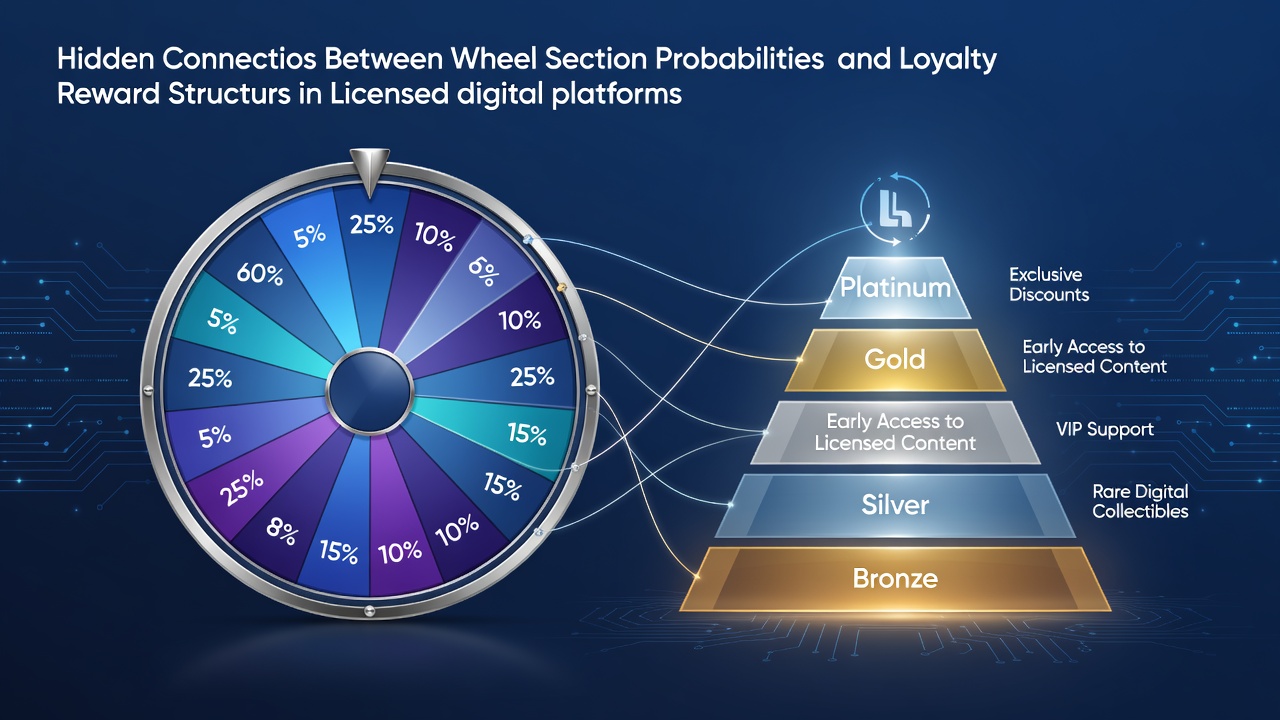
The Hidden Links Between Wheel Section Probabilities and Tiered Loyalty Reward Structures in Licensed Digital Platforms
Wheel section probabilities in licensed digital platforms rest on fixed mathematical foundations that operators track through detailed analytics, and these same datasets feed directly into the design of tiered loyalty reward structures. European roulette wheels carry 37 sections while American variants hold 38, each producing known hit rates that software studios log across millions of spins to forecast player session lengths and spending patterns. Loyalty programs then assign players to bronze, silver, gold or platinum tiers based on accumulated activity, with reward multipliers, cashback percentages and bonus allocations calibrated to those same probability curves.
Core Mechanics of Wheel Probabilities
Each wheel section maps to a precise likelihood that remains constant under certified random number generators, yet aggregated play data reveals how repeated exposure to particular outcomes shapes retention metrics. Research indicates that sections with lower hit frequencies correlate with extended play sessions when paired with escalating loyalty rewards, because the underlying variance encourages continued engagement while the platform offsets risk through tier progression thresholds. Operators monitor these distributions via backend systems that flag deviations in real time, ensuring regulatory compliance across multiple jurisdictions.
Structure of Tiered Loyalty Systems
Tiered loyalty programs operate on cumulative point systems where higher levels unlock proportionally larger benefits, and platform algorithms adjust entry requirements according to expected value calculations drawn from wheel outcome histories. Data shows that players reaching gold or platinum status receive reward rates that compensate for the house edge embedded in each wheel section, creating a feedback loop that sustains long-term participation without altering core game mathematics. Industry reports from the Nevada Gaming Control Board document how such structures maintain transparency while aligning player incentives with platform economics.
Data-Driven Connections Between Probabilities and Rewards
Analytics teams integrate wheel section probability models with loyalty tier algorithms so that reward distribution mirrors observed hit rates across different game variants. For instance, platforms adjust bonus multipliers on lower-probability sections to balance player perception of value, while higher-frequency sections feed into base-tier rewards that encourage initial engagement. This linkage emerges from large-scale datasets that capture both spin results and redemption patterns, allowing operators to refine tier thresholds without modifying licensed game code. Observers note that these adjustments often coincide with seasonal traffic peaks, when platforms recalibrate reward structures to match projected volume increases.
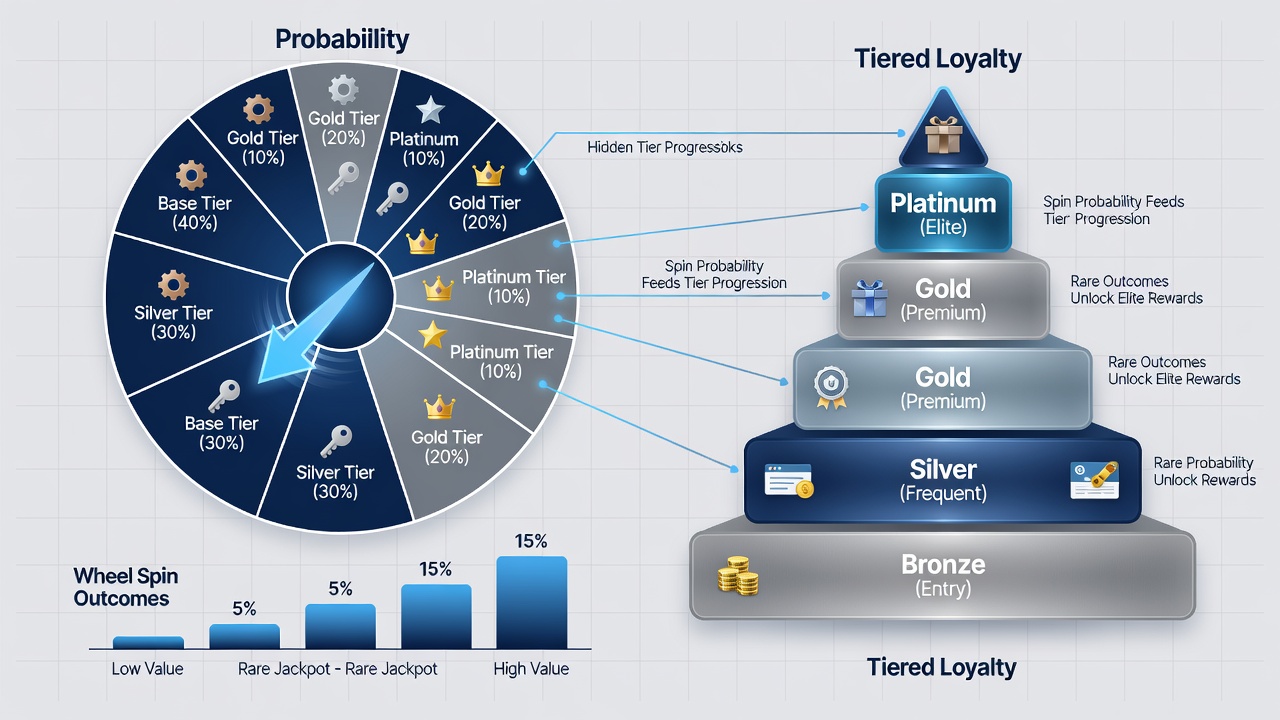
Further integration appears when platforms segment player cohorts by historical section preferences and map those segments onto tier advancement curves. A study released by the University of Nevada, Reno examined retention data and found measurable correlations between specific probability-weighted outcomes adn the speed at which players advance through reward tiers. Such findings inform how operators set point accrual rates so that loyalty benefits scale in proportion to the statistical properties of the wheel itself, preserving fairness while supporting commercial objectives.
Regulatory Oversight and Implementation Patterns
Licensed platforms must report probability metrics and reward structures to oversight bodies that verify both elements remain independent of manipulation. The Victorian Commission for Gambling and Liquor Regulation in Australia requires operators to demonstrate that loyalty tier algorithms do not distort certified random outcomes, a standard that compels detailed documentation of the data flows connecting wheel sections to reward allocations. Similar frameworks operate in other regions, where compliance teams cross-reference spin logs against loyalty redemption records to confirm consistency. These requirements have prompted development of standardized reporting formats that capture both probability distributions and tier progression statistics in unified submissions.
Trends Emerging in August 2026
By August 2026, several major software providers plan to release updated analytics suites that link wheel section probability engines more tightly with dynamic loyalty tier engines. Early documentation indicates these tools will allow real-time recalibration of reward multipliers based on live probability feeds, while maintaining separation between game logic and promotional systems. Regulators in multiple jurisdictions have signaled interest in reviewing the new protocols to ensure continued compliance with existing licensing conditions. The changes reflect ongoing industry efforts to refine data utilization without introducing alterations to certified game mechanics.
Conclusion
The connections between wheel section probabilities and tiered loyalty reward structures arise from shared analytical foundations that licensed operators apply across their platforms. Probability data informs tier thresholds, reward scaling and player segmentation models, while regulatory frameworks ensure these linkages preserve game integrity. As platforms continue to evolve their reporting and analytics capabilities, the underlying relationships remain grounded in measurable distributions and documented operational practices that support both compliance and commercial sustainability.